What’s new in the third edition of the MLA Guide to Digital Literacy?
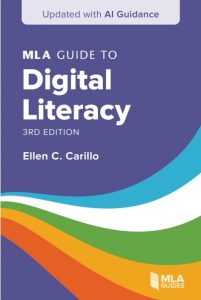
The third edition of one of the MLA’s best-selling classroom guides, now updated with AI guidance, helps students understand why digital literacy is a crucial skill for their education, future careers, and participation in democracy. Offering practical guidance for assessing information online, this guide provides students with the tools to locate reliable sources among the clickbait and viral videos that pervade the web. The chart below gives a head-to-head comparison of the second and third editions. Preorder your copy of the third edition now!
 |
 |
|
| MLA Guide to Digital Literacy, 3rd edition (2026) | MLA Guide to Digital Literacy, 2nd edition (2022) | |
| Understanding algorithms, bots, filters, visual manipulation | ✓ plus updated information on deepfakes, fake headlines, and other disinformation | ✓ |
| Understanding algorithmic bias | ✓ | ✓ |
| Understanding AI tools, prompts, and AI-powered search engines | ✓ plus a new lesson plan and student exercises on AI | |
| Discussion of AI in relation to ethics, privacy, and bias | ✓ | |
| Online searching and research; finding primary sources | ✓ | ✓ |
| Inclusive search and citation; digital tools for managing sources | ✓ | ✓ |
| Analyzing data visualizations | ✓ | ✓ |
| Understanding user biases | ✓ | ✓ |
| Evaluating the reliability of sources | ✓ | ✓ |
| Avoiding plagiarism | ✓ plus discussion of AI and plagiarism | ✓ |
| Composing in digital spaces | ✓ | ✓ |
| Customizing filters and algorithms to control your online experiences | ✓ | ✓ |
| Illustrations | 28 | 28 |
| Lesson plans | 5 | 4 |
| Activities | 15 | 12 |