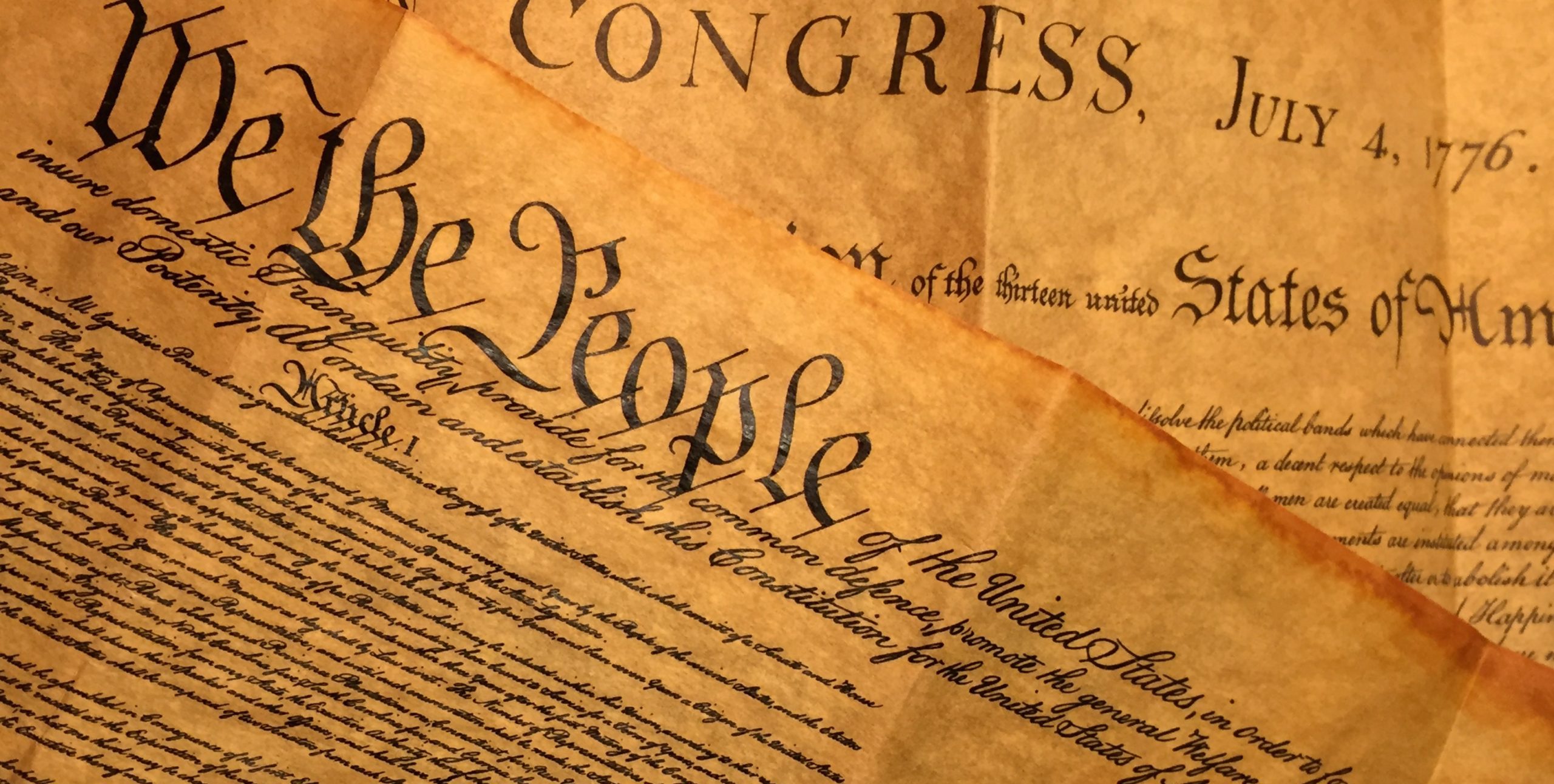
A functional democracy depends on its participants being able to understand the operations of their government. The knowledge and skills that come from MLA disciplines–language, literature, writing, and cultural studies–are as key to democratic participation as the knowledge learned in political science or history. The analytical skills developed by close reading and literary research enable us to be interpreters. And as participants in democracy we are constantly called on to be interpreters. We interpret and reinterpret the founding documents of the United States to understand their utility in our own age, and we must interpret stump speeches and op-eds and congressional addresses and campaign literature.
The interpretative skills required of participants in a democracy are addressed by the essays in this collection. How do language and literature teachers explore in their classrooms what it means to engage in the processes of a democracy? This collection presents some replicable examples of how to teach about and in a democracy, working from a range of texts from the Declaration of Independence to N. K. Jemisin’s “The Ones Who Stay and Fight.” It makes the case that civics education relies on careful reading and that discussing democracy demands discussing book banning. It argues that students need to be encouraged to participate in their communities and be given tools to do so, and it asks us to consider what American literature teaches us about what it is to be an American.
No particular political perspective owns democracy. But in order to become good citizens, or noncitizen participants, in a democracy, our students need to learn what the humanities teach. Don’t cede the United States’ 250th anniversary–claim it. Claim the opportunity it represents to teach students to use the methods of our discipline. Those methods help make thoughtful Americans. The drafts of the US Constitution and the Articles of Confederation and the Declaration of Independence show that these founding documents were created by humans, humans struggling with composing, revising, clarifying, and compromising. In this anniversary year and beyond, let’s celebrate deep reading and messy writing as functions at the core of our nation’s beginnings and essential for democracy today.
Paula M. Krebs
MLA Executive Director
2026
Essays
Samuel Cohen, “Teaching the History of Book Banning”
Tabitha Espina, “Writing for Social Change: Contexts, Cultures, and Community-Engaged Writing as Democracy”
Tracy Floreani, “What Is an American? Reading Hector St. John de Crèvecoeur’s Letters from an American Farmer”
Lauren Rule Maxwell, “‘What Is an American?’: Tracing the Evolution of US Citizenship in the American Literature Survey”
Jeffrey Allen Tucker, “Helping Students Become Engaged Citizens in the University of Rochester’s Experiencing Civic Life Program”